
Circulars | Discourse 001

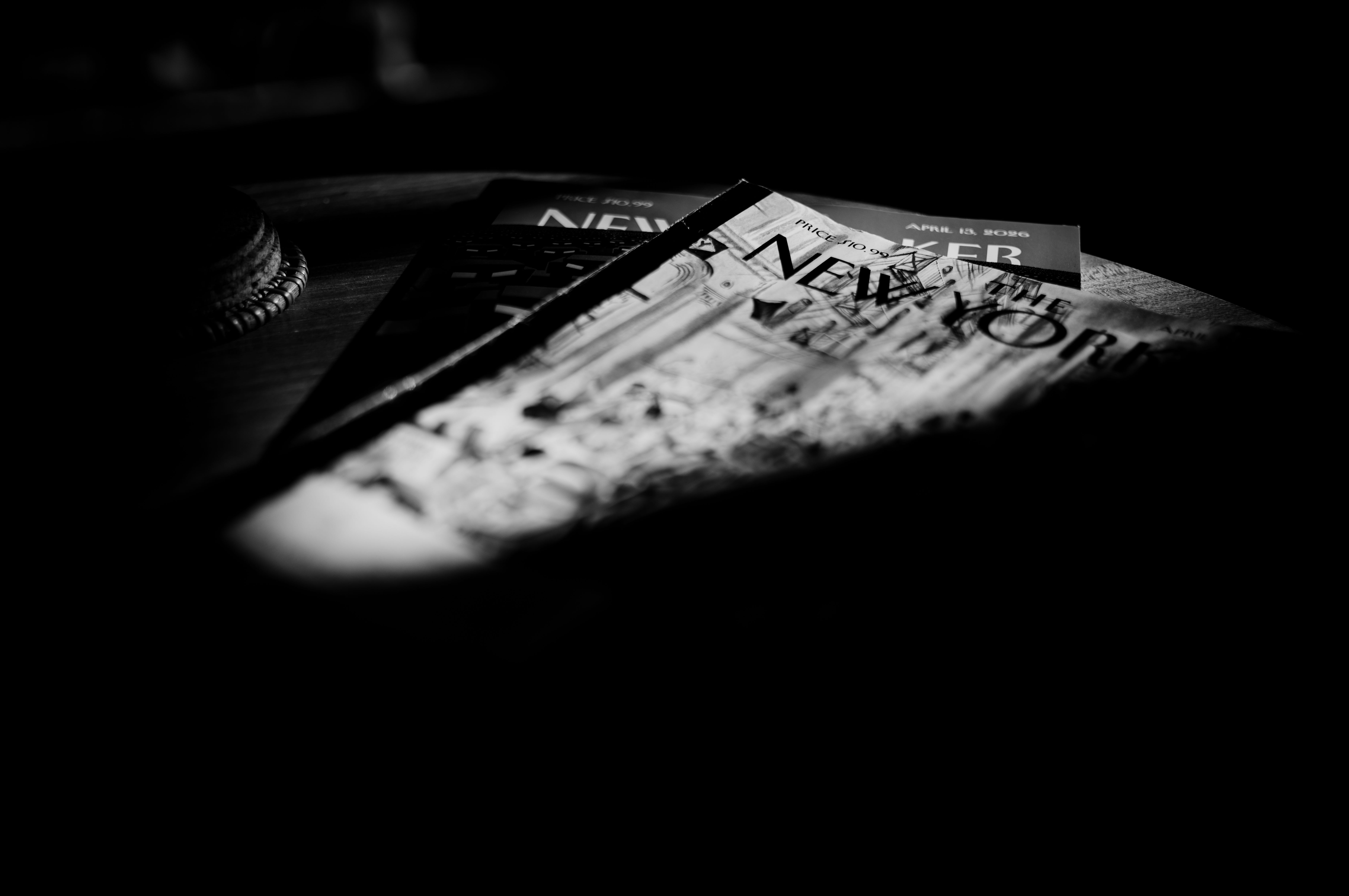
The first print issue of The New Yorker I’ve owned in years is on the coffee table in front of me.
I read it cover to cover. Every word. Even the fiction. It took a week, but I did it1.
The second New Yorker issue arrived on the day I finished the first. No rest for the literary wicked.
In an attempt to reduce digital clutter and move back toward something tactile, something analog, something calm, I resubscribed to the New Yorker and its weekly deluge of words. It felt like the right kind of signal to send my brain. Slow down. Sit with something. Read it all the way through.
Classic Ackbar. It was a trap, and I knew it as soon as I hit subscribe. But I didn’t care. I thrive on delusional self-confidence when it comes to completing unnecessary tasks. I know what I’m doing. This will be fine.
The first issue is easy. There’s momentum. Intent. A kind of ceremony to it. Each page is a gift. For the second issue, the enthusiasm is still there, but the timing starts to slip. The articles seem to take a little longer to finish. By the third issue, if you’re not careful, and before you even know it’s happening, the STACK begins to form. It starts on the coffee table with two or three issues arranged in a classy half-fan, like an oversized hand of poker. And then it grows, and the stack may need to move to the floor next to the couch, and soon it will double as a coffee table as the mail carrier dutifully drops the next issue into the box, week after week after week. He doesn’t care if you’ve read the last one. The next one has arrived if you’re caught up or not.
Once the stack starts to grow, it’s hard to tamp it down. In theory, anyway. Or from what I’ve heard, or maybe remember from ten or fifteen years ago. But that won’t happen this time.
Paralysis by analysis has never been an issue for me. I’ll dive into new projects headfirst without looking or checking the water temperature. If anything, that’s always been one of my strengths. I don’t spend much time saying I want to figure out if I can do something. I just start doing it. Cover cycling, create a video series, start a podcast, write a book, go to Europe and get paid to make videos for a professional mountain biking team. If I get a good idea, or even a hare-brained one, I’ll use that pirate ship’s plank as a springboard rather than a death sentence.
The problem is that for all of the seemingly good ideas I start, there are a few that simmer to death on purgatory’s back burner.
Behavioral science tends to focus on the gap between wanting something and actually doing it. But that isn’t quite my problem.
I don’t struggle to begin.
I struggle to stop beginning.
It’s not hesitation. It’s an accumulation. And that’s why I am making this concerted effort to slow down. Yet my default when slowing down seems to be to do even more.
And there lies the problem.
No matter how you dress up the new thing that’s supposed to help you breathe easier and focus, it’s still a new thing. It’s another input, and too many inputs still break the system.
Subscribing to a weekly periodical shouldn’t feel like that. It should be easy and leisurely, but before you know it, you’re Lucille Ball staring down the barrel of a conveyor belt full of chocolates. You try to catch up, realize you’re already behind, and speed up just enough to make it worse. It gets to the point where you have to write 1000 words about the damn magazine subscription that isn’t even two weeks old, yet.
Before subscribing, I should’ve started with a house plant like Gerhardt in 28 Days2. Keep that house plant alive for a year, and then I would be ready to recommit to a New Yorker subscription.
I didn’t because our brains are really good at clandestinely rebuilding the same pattern but masking it with better branding. A few years ago, I went through a Marie Kondo purge and waged a scorched-earth campaign on my physical possessions. Books, CDs, clothes. Anything I could dematerialize, I did.
And then I started shooting film again because I was sick of my digital workflow. I wanted bound books instead of a Kindle, records instead of Spotify, and a notebook and fountain pen instead of another app. It felt like the analog Ouroboros had come around to eat its digital tail.
The fantasy is that tangible objects will force a slower, better life. If done thoughtfully, they absolutely can do that. But analog systems alone do not save you from accumulation. They are the definition of it. It looks like a binary system: clutter or no clutter, but it’s all a mirage.
The universe of stuff lives on the same pendulum. Reduce digital noise at one extreme, and it swings back the other way, becoming material noise.
My goal in 2026 is to break this cycle before the clutter starts. Instead of wasting energy on how to organize it once it’s here, I want to prevent the build-up from starting at all.
Because the pattern is the same. Just dressed up in better objects.
Like the second New Yorker issue. On the table. Waiting to be opened.
I think this time it will be different. I can control the accumulation. Monitor the clutter, remove the noise. Refrain from taking on too many new things.
And to prove it, I naturally had to start a second Substack.
Welcome to the Walk Through.
A Book You May Enjoy3:
A whole book about noticing small things and not rushing past them. Buy it in print. Don’t forget to tie your shoes.
If you’re interested, the David D. Kirpatrick article on the CIA operative who targeted Iranian scientists is fascinating and a bit deflating.
I swore this scene was in Singles or maybe High Fidelity. Have no recollection of watching 28 Days, but it’s definitely the scene. This is what happens when you lived a block away from a Blockbuster in the late nineties.
My goal is to give at least one movie, book, album, etc. recommendation per post.
Bill, I think you would enjoy Ben Lerner’s new novel “Transcription”. Fits in nicely with the theme here.